

See.Decide.Operate. — Dr. Kamran Mamaghani
Thoracic Surgery Subspecialist and General Surgeon Tabriz
Has your doctor sent you to a surgeon with a CT scan or a pathology report? Start here.
First understand the finding, then decide.
Dr. Kamran Mamaghani is a thoracic surgery subspecialist and general surgeon. Thoracic surgery deals with diseases of the lungs, the pleura, the esophagus, the mediastinum and the windpipe. If another doctor has sent you to a surgeon with a CT scan, a pathology result or a word like "mass", it is natural to feel worried. This site explains what such a finding usually means, what to bring to the visit and who is with you after surgery. The result of the work-up is not always an operation; the doctor decides after seeing your documents and examining you.
More about the doctorFive areas, in plain language.
Each area has a page that explains what the problem is, how it is investigated and how treatment generally works. These pages are general information. Your diagnosis and plan are decided by the doctor after seeing your documents and examining you.
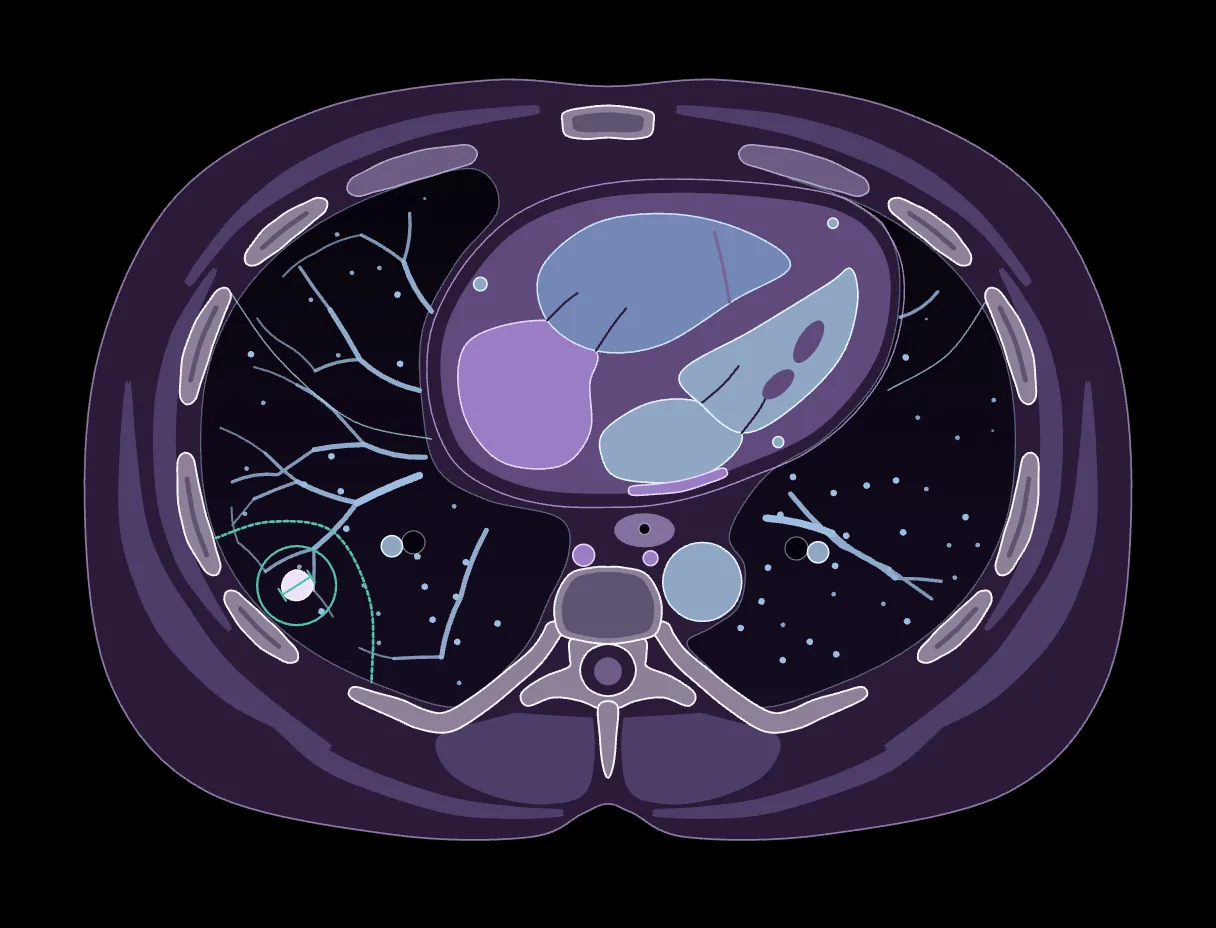
Lung nodules and masses
More than half of solitary lung nodules are not cancer, but every nodule or mass needs follow-up, and your doctor gives the answer after the tests. This page explains what the finding means, how it is investigated, when a biopsy or surgery is considered, and what you can do.
Read morePleura and chest wall
Pleural fluid, pneumothorax (collapsed lung), empyema and rib injury all occur in the space around the lung or in the chest wall. This page explains what each is, how it is investigated, what a chest tube does, and when to act urgently.
Read moreOesophagus and trouble swallowing
Trouble swallowing has many causes, from reflux and narrowing of the oesophagus to achalasia and tumours. This page explains which signs to take seriously, how the oesophagus is investigated, the general forms of treatment, and when it is urgent.
Read moreMediastinum and windpipe
The mediastinum is the space in the middle of the chest, and the thymus, windpipe and oesophagus lie in it. This page explains in plain language masses in this area, thymoma and its link with myasthenia gravis, and narrowing of the windpipe: symptoms, investigation, general treatment and when it is urgent.
Read moreThyroid nodules and general surgery
Thyroid nodules are very common and most are not cancer, but they need to be checked with ultrasound and sometimes a biopsy. This page explains what a thyroid nodule means, when surgery is considered, what to expect afterwards and when it is urgent.
Read more
From reading your records to care after surgery
Most people come to a chest surgeon with a CT scan or a pathology report. At each step you know what comes next.
- Step 1 of 5.
Reading your records and examination
Bring your CT disc, your pathology report and a list of your medicines. They are read together with your history and the examination.
- Step 2 of 5.
Further imaging and biopsy
Sometimes new imaging or a biopsy is needed to make a finding clearer.
- Step 3 of 5.
Deciding about surgery
The result is not always surgery. Sometimes follow-up or another treatment suits you better, and you hear why in plain words.
- Step 4 of 5.
Preparation and the operation
If an operation is needed, you get guidance beforehand on stopping smoking, your medicines, fasting and who comes with you.
- Step 5 of 5.
Care after surgery and follow-up
Wound and drain care and the follow-up visits are explained. Patient support can also help with dressing changes and nursing at home.
You are not alone on this path.
The surgical path is more than a visit and an operating room. Imaging, laboratory and pathology work, medicines and, after surgery, dressings, drains and stitches are part of it too. The support team coordinates these so that you and your family spend less time chasing them.
Imaging and ultrasound
Quick appointments and results, second reads of images, and reports sent directly to the treating doctor.
Laboratory and pathology
Quick appointments and results. The support team arranges sampling, follows up on results and sends reminders for periodic tests.
Care after surgery and treatment at home
When getting out is hard, part of the care after surgery comes to you. The support team books and coordinates it, following your surgeon's instructions.
Pharmacy and specialty medicines
Help getting specialty medicines, with quick delivery for Tabriz residents.
Fast referral to specialists and sub-specialists
If you need another doctor, the support team books the appointment and refers you.
Rehabilitation and wellbeing
The support team books quick appointments and refers you to rehabilitation and health specialists.
Services marked "Free" on the support form are provided at no cost.
Why were you referred to a surgeon?
Tap what you are facing to reach the matching page. This list is not a diagnosis; it only points you to the right page.
- A nodule or mass on a CT scan
- Fluid in the chest
- A collapsed lung (pneumothorax)
- Trouble swallowing
- A mass in the mediastinum
- A blow to the chest
- A thyroid nodule
- A chest tube
- Care after surgery
Sudden shortness of breath, severe chest pain or coughing up more than a few streaks of blood cannot wait for an appointment. Call 115 (Iran's emergency number) right away. When should I call urgently?
Simple answers to the first questions.
A CT scan shows a nodule; does that mean I have cancer?
Not necessarily. A nodule is a round or oval spot on the image, and it has different possible causes. More than half of solitary lung nodules are not cancer, but every nodule needs follow-up. Its size and shape, a comparison with earlier CT scans, your history and sometimes more imaging or a biopsy are put together to work out what it is. A single report is not enough to decide.
Do I definitely need surgery, or can I wait?
Surgery is not always needed. Some findings only need follow-up imaging, some need a biopsy and some need an operation. Waiting means follow-up on your doctor's plan, not leaving the finding alone. The decision is made after your documents are seen and you are examined, and you have every right to ask about anything you do not understand.
What should I bring to the first visit?
The CT scan disc or files and the report, the pathology result if a biopsy was done, reports of earlier operations and hospital stays, recent test results and a list of all the medicines you take. If something is missing, come anyway; support can help you get it.
What is a chest tube (drain)?
It is a thin, soft tube placed to let fluid or air out from around the lung, and it may also be needed after some operations. How much it hurts differs from person to person; if you are in pain, tell the care team so they can do something about it.
When should I stop smoking before surgery?
As early as you can. Stopping helps wound healing and breathing after surgery, and you do not need to wait for the last days. Talk to your doctor about the right timing and way to stop.
What should I do about my blood thinner before surgery?
Do not stop it or change it yourself. Some medicines need adjusting before an operation, but which ones and when is decided together by the doctor who prescribed it and the surgeon. Bring your list of medicines.
Who changes my dressing at home after surgery?
Support can arrange dressing changes, drain removal, stitch removal and nursing at home, following your surgeon's instructions. A drain is removed only on your own surgeon's instruction. Ask about the details of each service when you call.
When should I call urgently?
Sudden shortness of breath, severe chest pain or coughing up more than a few streaks of blood cannot wait for an appointment; call 115 (Iran's emergency number) right away. The full list of warning signs is in the patient guide.
Do you work with insurance?
The list of insurers will be announced soon.
Do you offer online follow-up?
Details will be announced once the doctor confirms them.
These answers are general and do not replace your doctor's advice for your situation.
The first step, a calm conversation.
Go to the booking page or talk to support. Either way, we are with you.
Support number