

Surgical areas
Lung nodules and masses, the pleura and chest wall, the esophagus, the mediastinum and windpipe, and the thyroid, each explained in plain language.
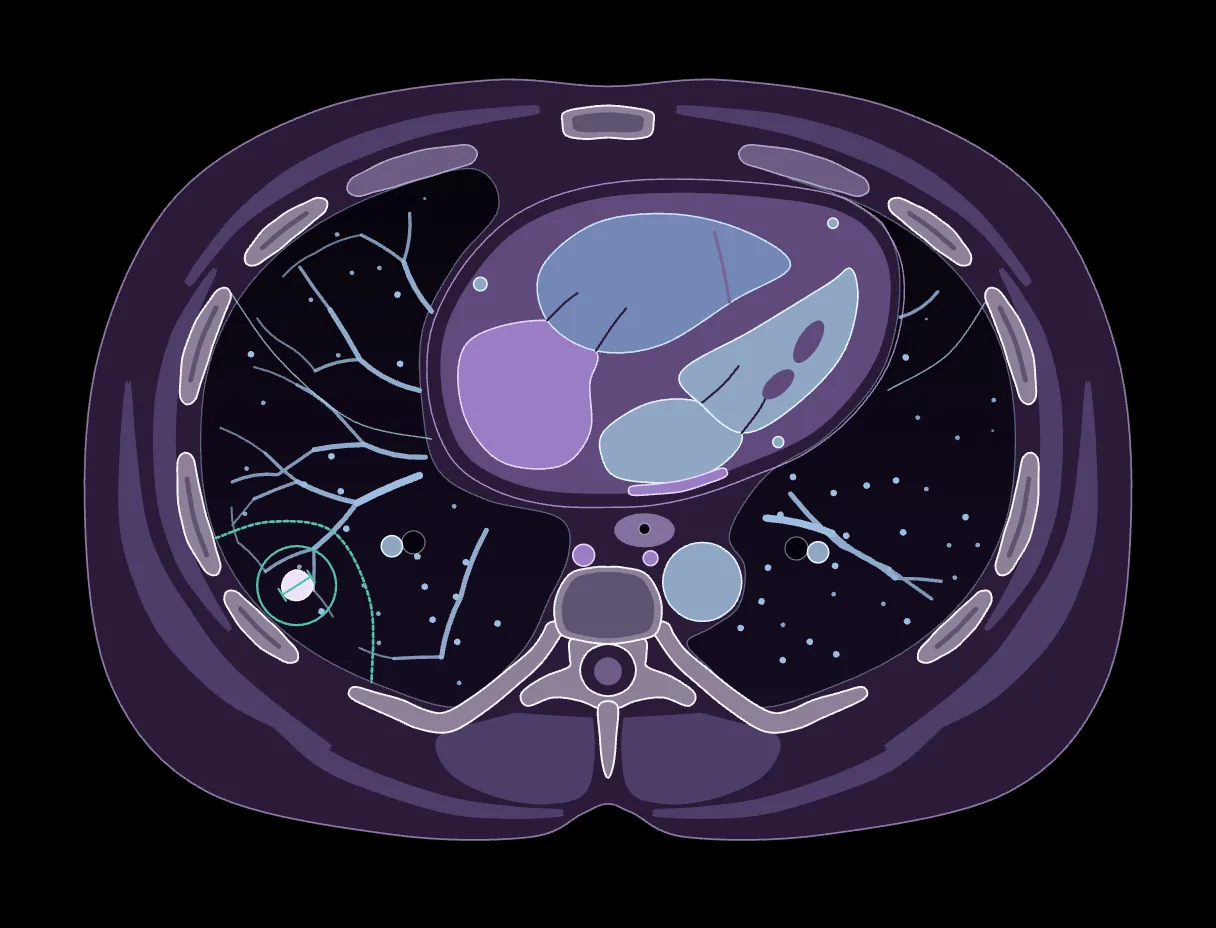
Lung nodules and masses
More than half of solitary lung nodules are not cancer, but every nodule or mass needs follow-up, and your doctor gives the answer after the tests. This page explains what the finding means, how it is investigated, when a biopsy or surgery is considered, and what you can do.
Read morePleura and chest wall
Pleural fluid, pneumothorax (collapsed lung), empyema and rib injury all occur in the space around the lung or in the chest wall. This page explains what each is, how it is investigated, what a chest tube does, and when to act urgently.
Read moreOesophagus and trouble swallowing
Trouble swallowing has many causes, from reflux and narrowing of the oesophagus to achalasia and tumours. This page explains which signs to take seriously, how the oesophagus is investigated, the general forms of treatment, and when it is urgent.
Read moreMediastinum and windpipe
The mediastinum is the space in the middle of the chest, and the thymus, windpipe and oesophagus lie in it. This page explains in plain language masses in this area, thymoma and its link with myasthenia gravis, and narrowing of the windpipe: symptoms, investigation, general treatment and when it is urgent.
Read moreThyroid nodules and general surgery
Thyroid nodules are very common and most are not cancer, but they need to be checked with ultrasound and sometimes a biopsy. This page explains what a thyroid nodule means, when surgery is considered, what to expect afterwards and when it is urgent.
Read more
The full patient guide
What to bring to the first visit, preparing for surgery, care at home and the signs that need urgent attention.